
Sourdough Bread Timeline Planner
Build a backwards-planned sourdough bread timeline from starter feeding through mixing, folds, bulk fermentation, shaping, proofing and baking.
Timeline
Enter your bake details.
Backwards plan
— hours estimated for bulk
Watch the dough. An aliquot jar measures rise more reliably than the main vessel.
· Free
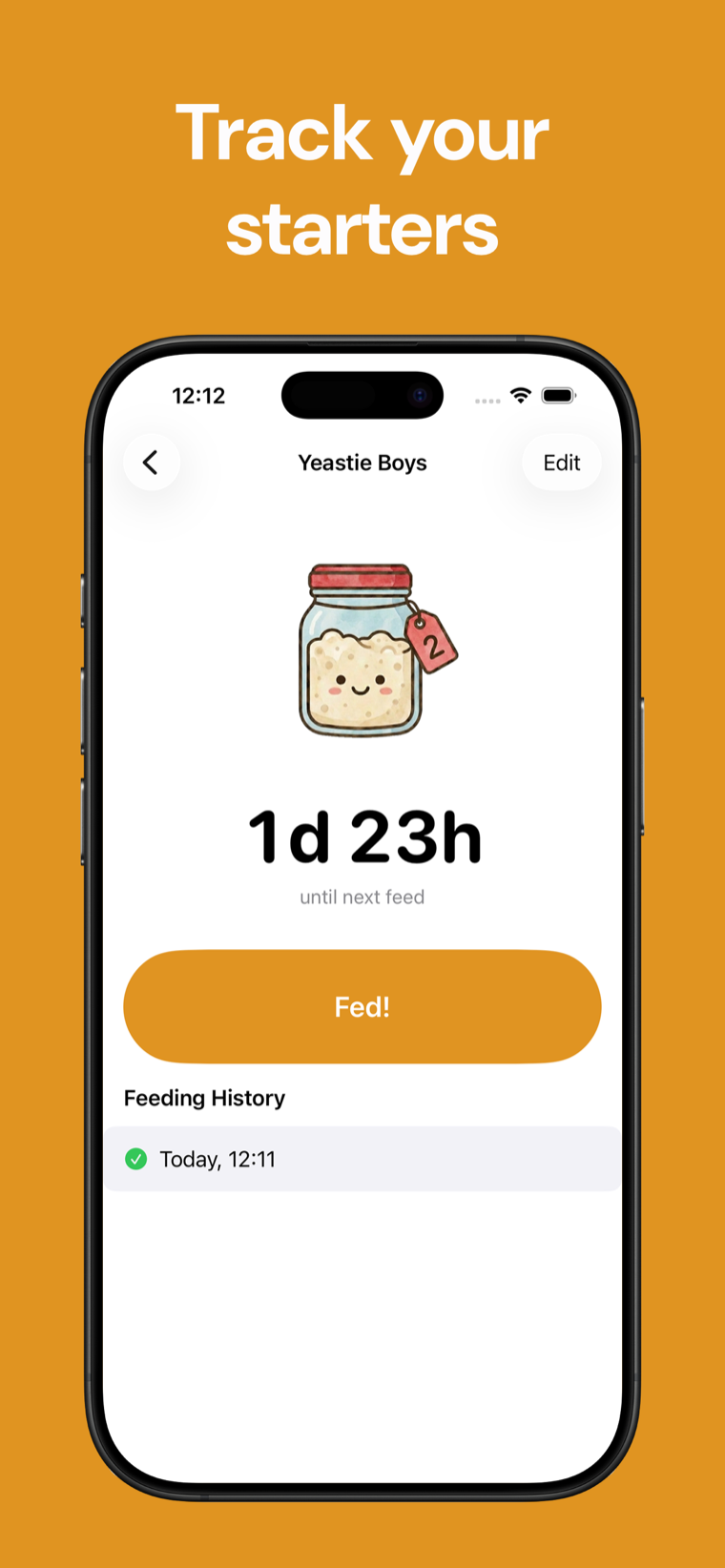
Track it in Sourdough Tracker.
Connect starter readiness with the complete sourdough bake workflow in the Sourdough app.

How the sourdough bread timeline works
This sourdough bread timeline works backward from your bake time and connects starter readiness to the full bake workflow. It uses room temperature to adjust the starter and bulk-fermentation anchors.
At 25 °C, a 1:1:1 starter feed peaks in about 5 hours, while bulk fermentation with 20% starter takes about 4.5 hours to a 50% rise. The planner applies the supplied Q10 model, where fermentation roughly doubles in rate per 10 °C.
Clock estimates are windows, not guarantees. Judge bulk by a 30-50% rise, a domed jiggly surface and bubbles at the container edge; an aliquot jar is more reliable than the main vessel.
estimated hours = referenceHours × 2^((referenceTemp - temperature) / 10) × (ratioTotal / referenceRatioTotal) Outside roughly 15-32 °C (59-90 °F), the estimate breaks down because yeast and bacteria diverge. The proofing method is shown for planning context, but no method-specific proof duration is invented here.
Sourdough bread timeline FAQ
What does this sourdough timeline planner calculate?
It works backward from your bake time and starter readiness time, adjusting the supplied starter and bulk anchors for room temperature.
Why does the timeline show visual checks?
Bulk fermentation should be judged by a 30-50% rise, a domed jiggly surface and bubbles at the container edge, not by doubling the dough or trusting a clock alone.
Why is there no exact proofing duration?
The reference provides no method-specific proof duration, so the planner labels your method without inventing a number. Use dough cues to decide when it is ready.
What happens outside the temperature range?
Below 15 °C or above 32 °C, the planner shows a warning because the supplied model breaks down as yeast and bacteria diverge.
What internal temperature indicates a lean loaf is done?
The supplied reference gives roughly 205-210 °F (96-99 °C) at the centre of a lean sourdough loaf. Measure at the centre, avoiding large air pockets.