
Sourdough Starter Feeding Schedule Planner
Build a dated sourdough starter feeding schedule with expected refreshes and a visual readiness window.
Schedule
—
Expected refresh
— g starter
- Feed with
- —
- Estimated ready window
- —
- Desired use
- —
Watch the starter. A peak starter is roughly doubled or tripled, domed and just beginning to flatten.
· Free
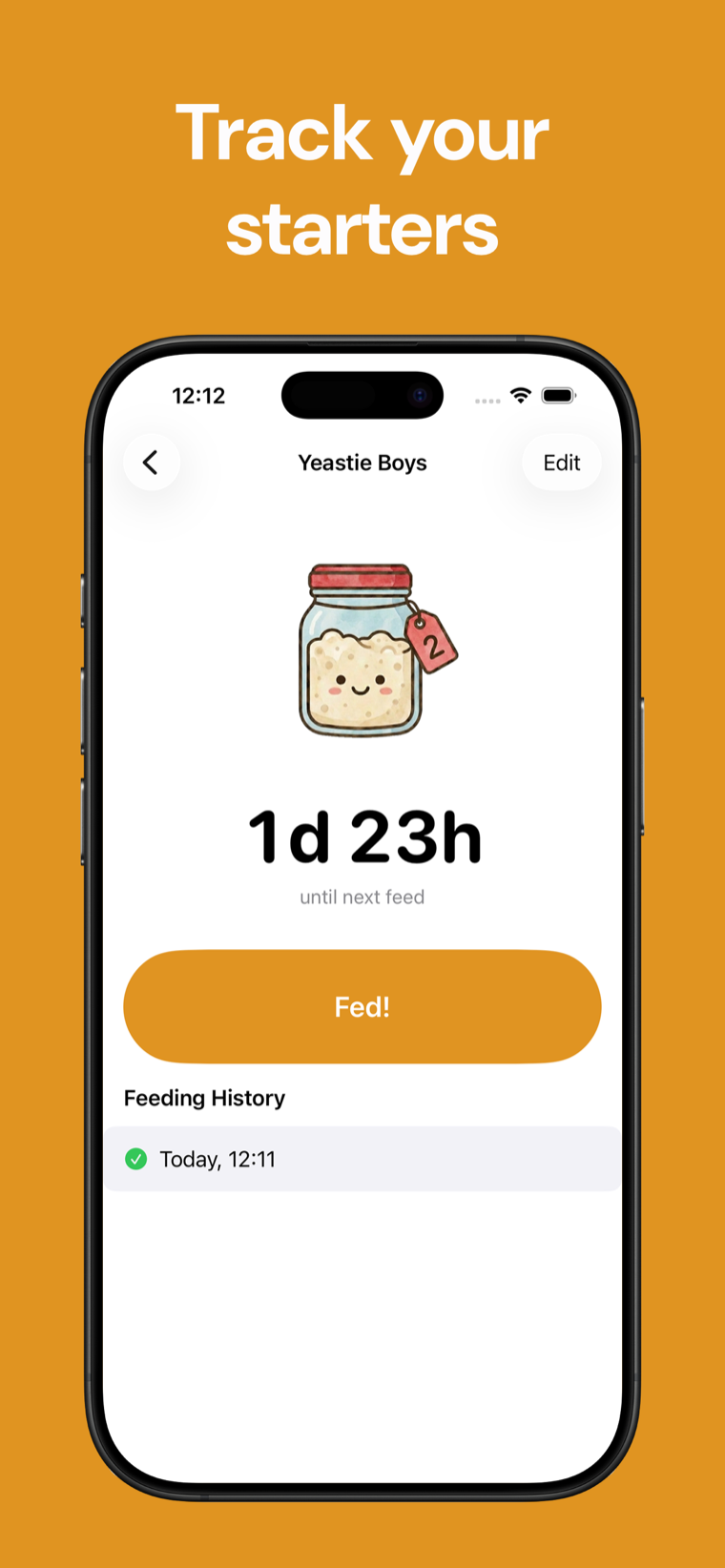
Track it in Sourdough Tracker.
Keep starter schedules, reminders and baking notes together in the sourdough app.

How the sourdough starter feeding schedule works
This sourdough starter feeding schedule applies your selected ratio to the current starter amount, then estimates a ready window from room temperature and the feeding ratio.
The estimate is a window, not a promise. A peak starter is roughly doubled or tripled, domed and just beginning to flatten, with bubbles at the edge; once the dome collapses, it is past peak.
estimated hours = 5 × 2^((25 − temperature °C) ÷ 10) × (flour+water parts ÷ 2) The reference point is a 1:1:1 starter at 25 °C (77 °F), which peaks in about 4–6 hours; this planner uses 5 hours. Outside roughly 15–32 °C (59–90 °F), the estimate breaks down, so use visual cues instead.
Sourdough starter feeding schedule FAQ
What does the schedule calculate?
It calculates flour and water amounts for the selected ratio, the expected refreshed starter mass, and a ready window based on temperature and ratio.
Why is the result a window?
Fermentation varies, so the clock is only an estimate. Look for a domed, jiggly starter with bubbles at the container edge and use it near peak.
What happens outside 15–32 °C?
The model shows a warning instead of treating the time as reliable. Yeast and bacteria diverge outside that band; use visual cues instead.
Does a larger feeding ratio take longer?
In this model, yes: time scales with the flour and water parts. A 1:5:5 feed has ratio total 10, compared with 2 for 1:1:1.
Are my values saved?
No. The calculation runs in your browser and this tool does not save the values you enter.